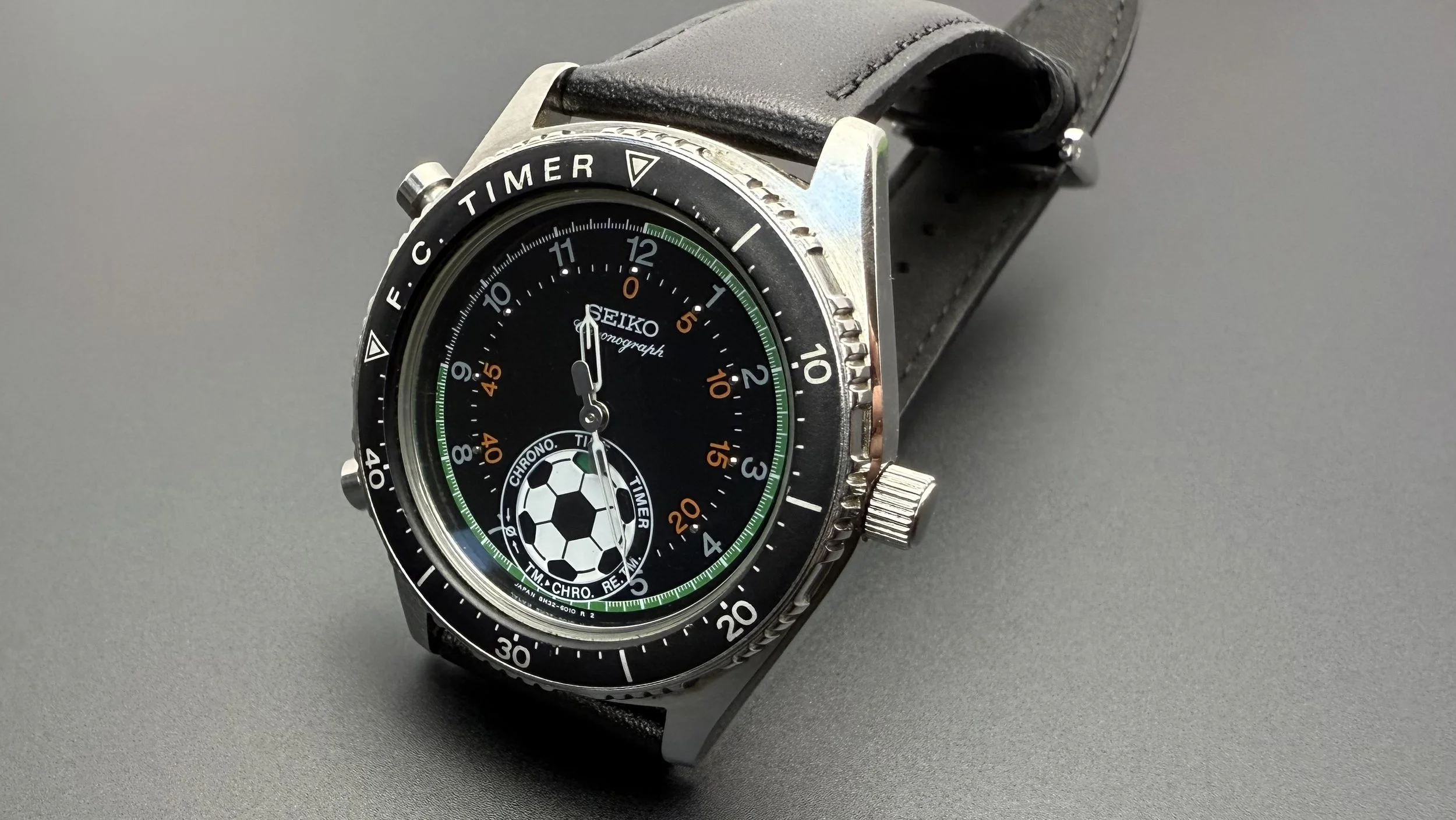
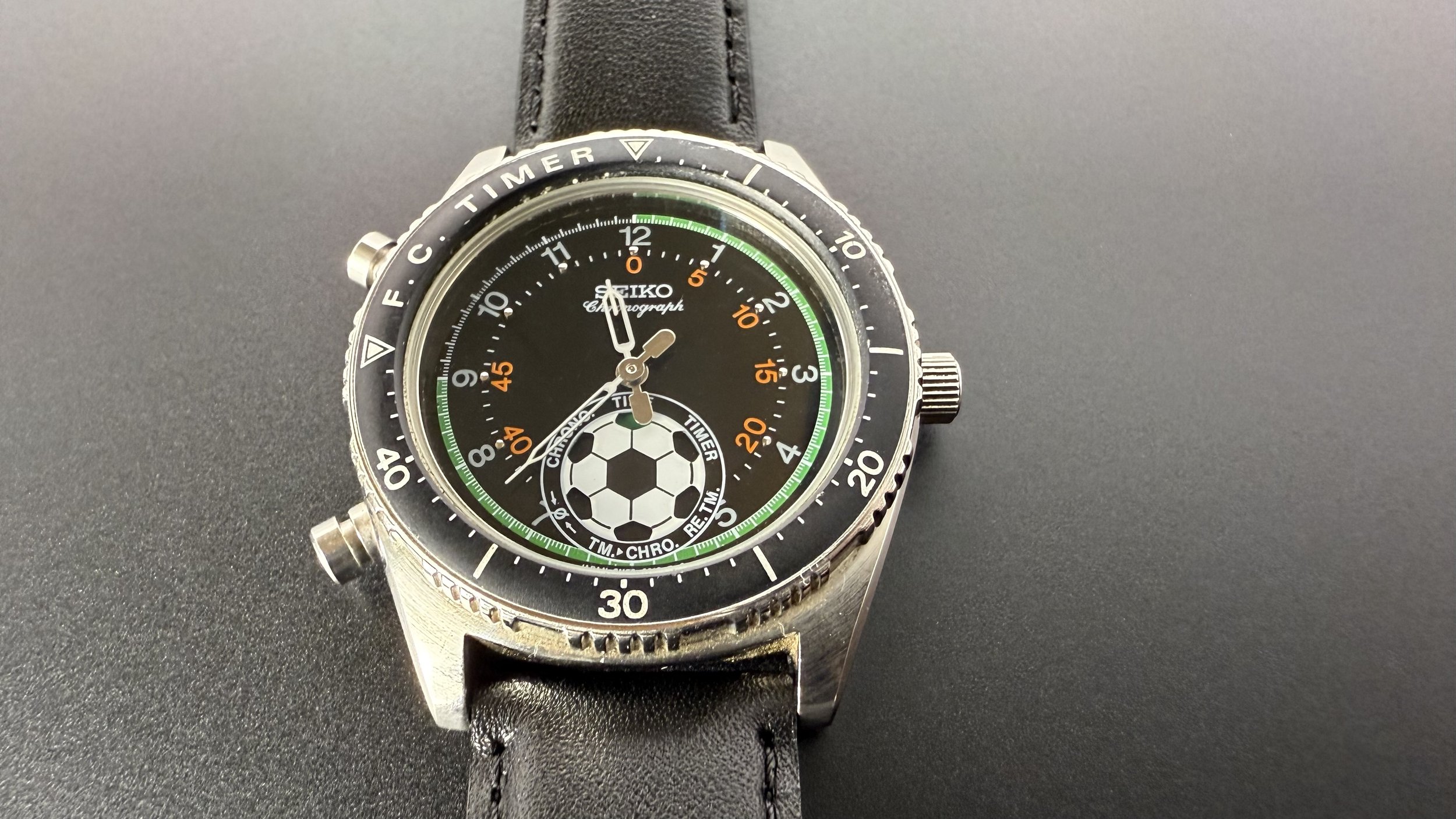
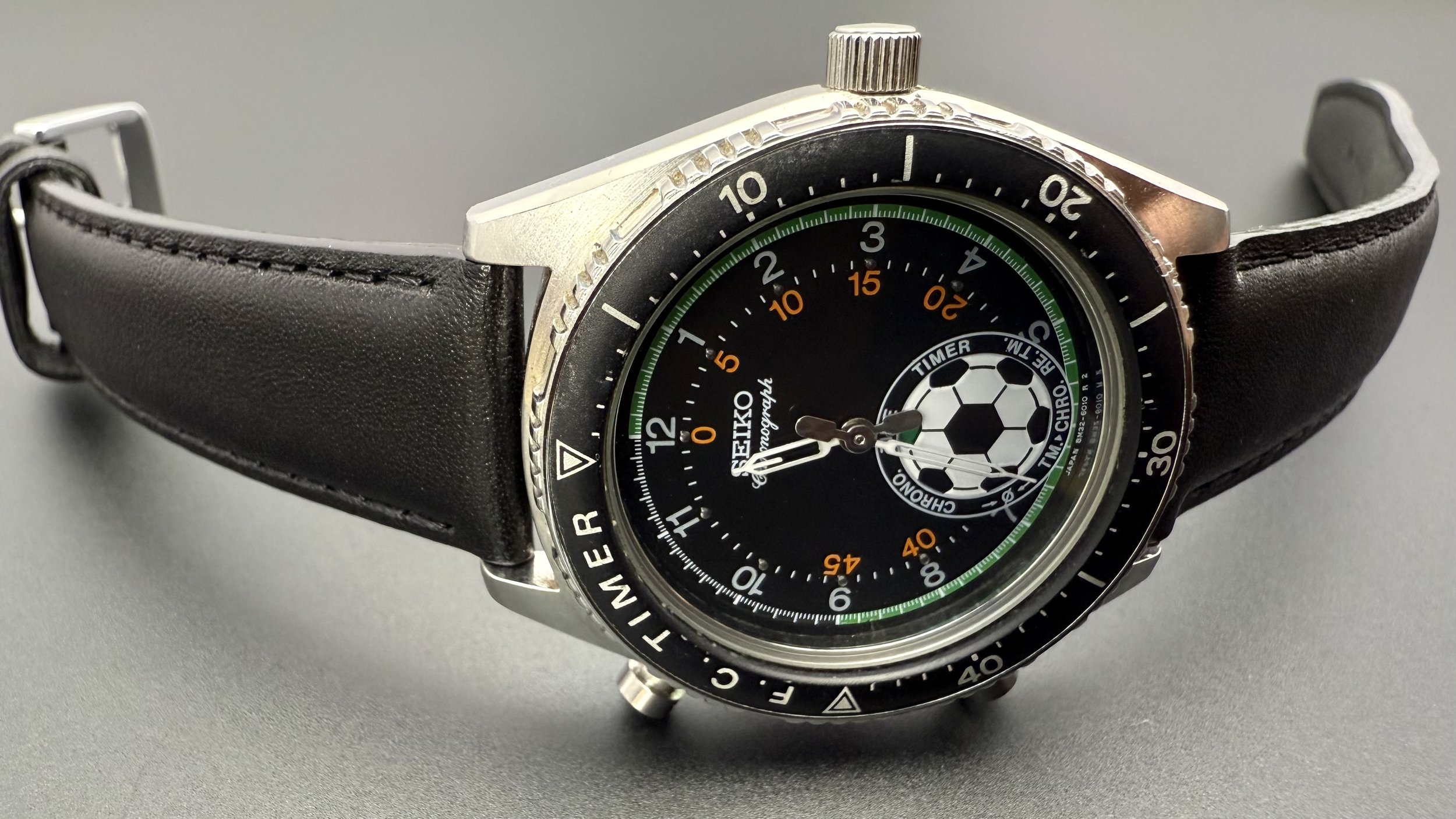
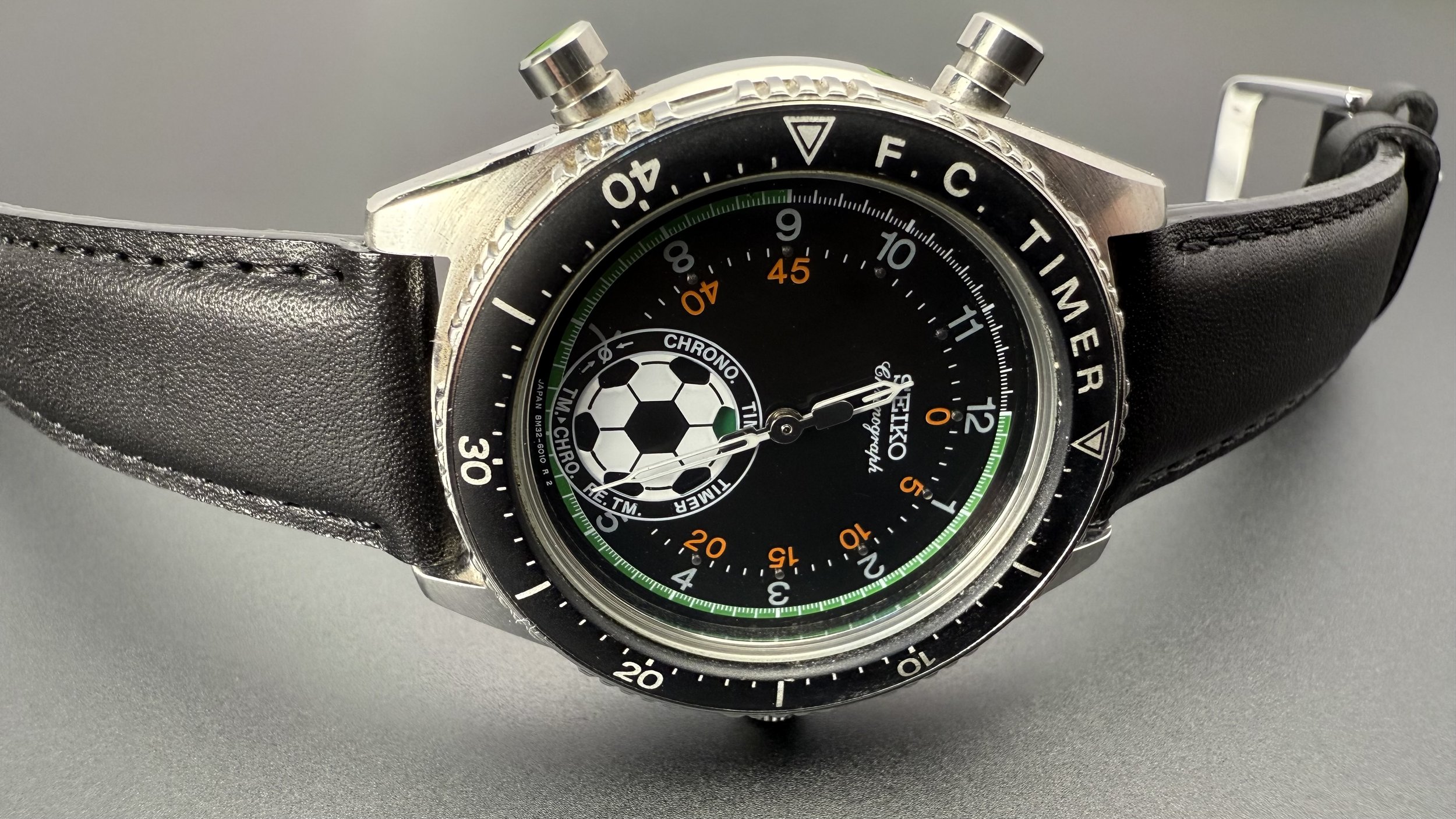
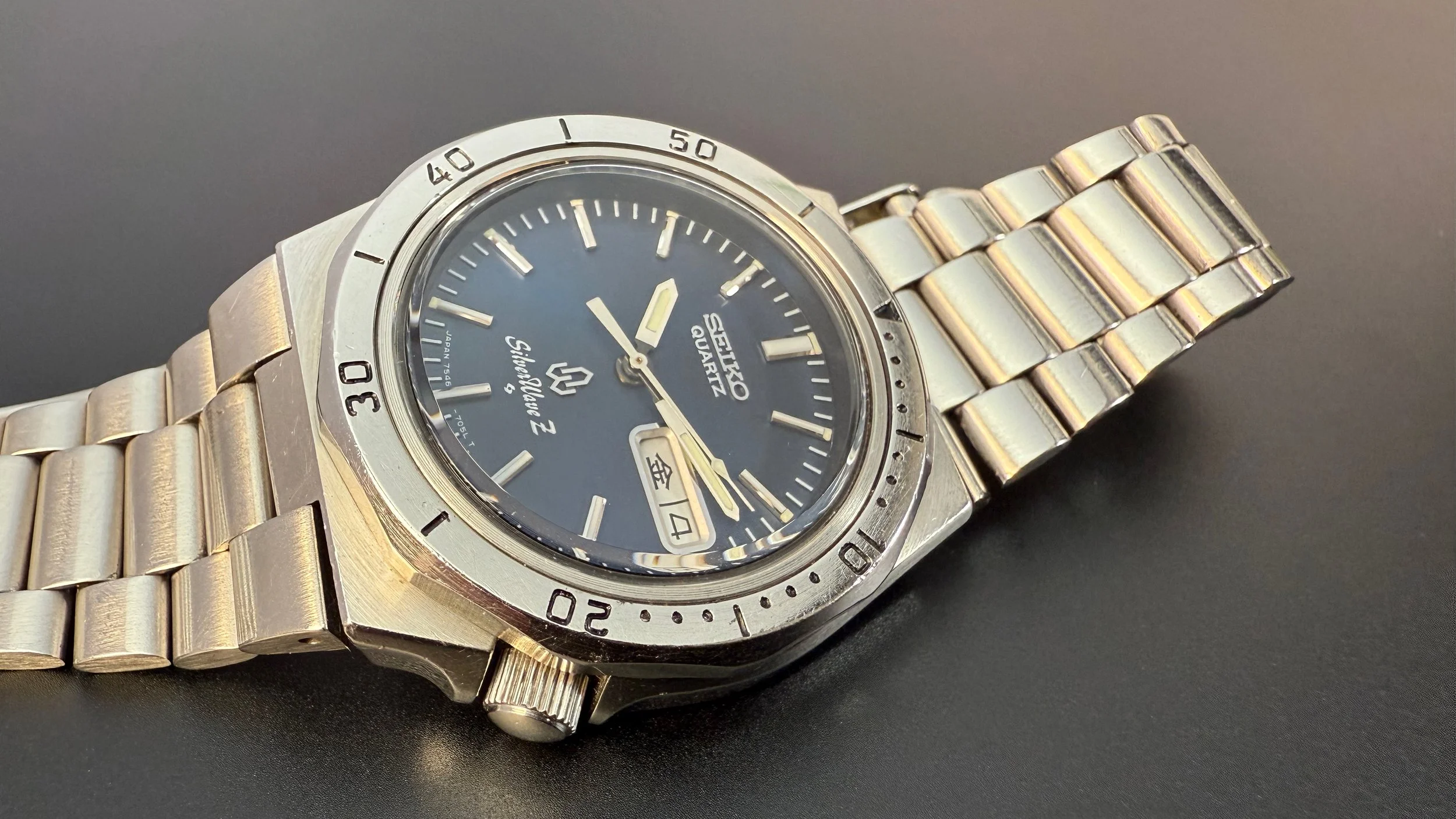
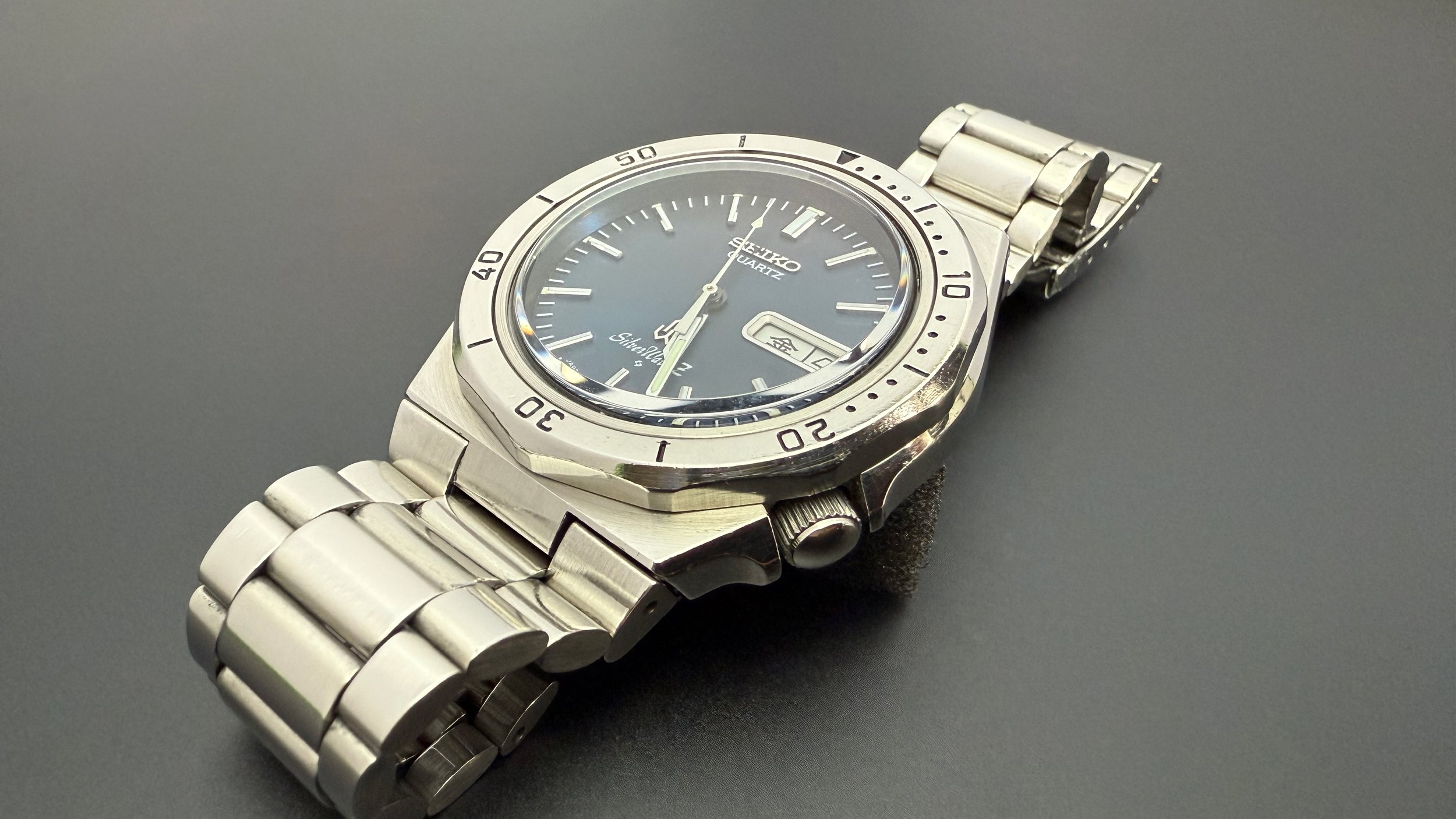
The Seiko “Running Man” A714-5050
A Wrist-Born Sprint Through the Quartz Age
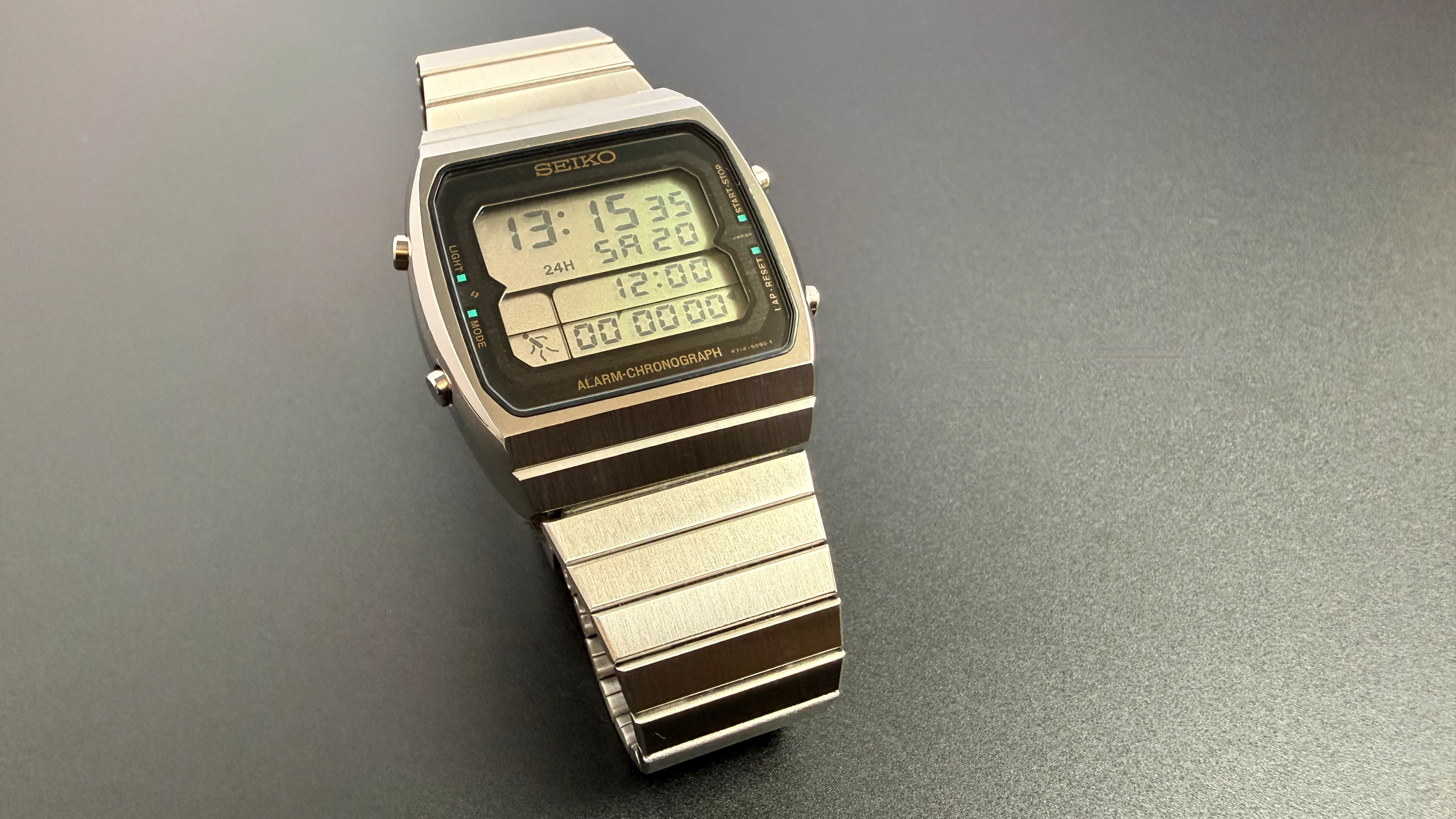
There are plenty of vintage digital watches that feel like products of their time. Then there are the ones that “perform” their time—literally. The Seiko “Running Man” A714-5050 belongs to that second category: a sharply styled, early digital alarm-chronograph whose personality is baked into the display through a tiny animated runner. It’s a watch that manages to be both a practical tool and a small piece of wrist-mounted theatre.
What follows is a collector-focused look at what makes the A714-5050 special: its design language, the character of the A714 module, and what to pay attention to.
A Design That typifies “Seiko Digital”
Even without knowing the nickname, the A714-5050 announces itself as a Seiko digital from the era when brands were competing on shape, finishing, and interface as much as on raw timekeeping.
Several traits stand out:
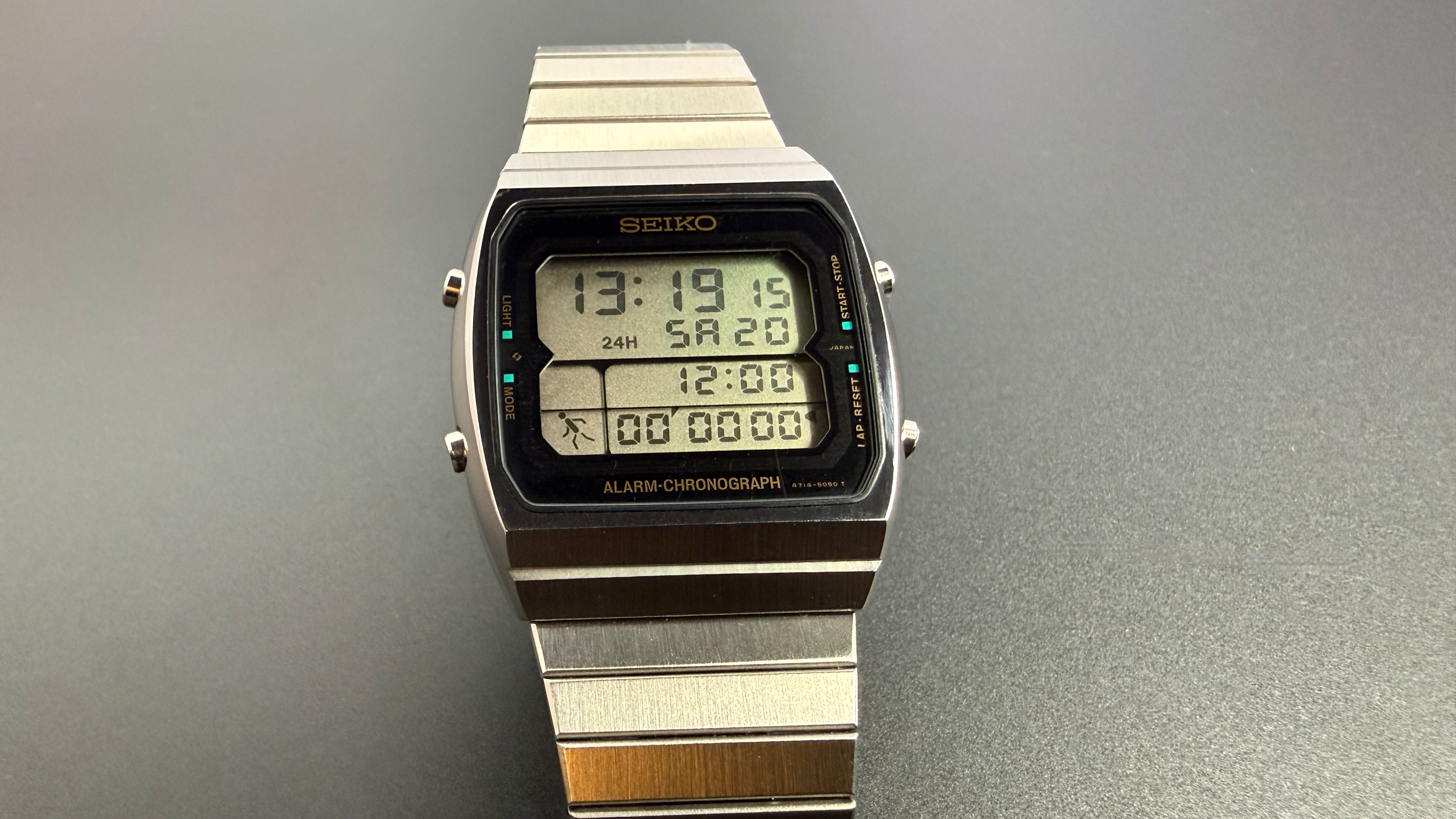
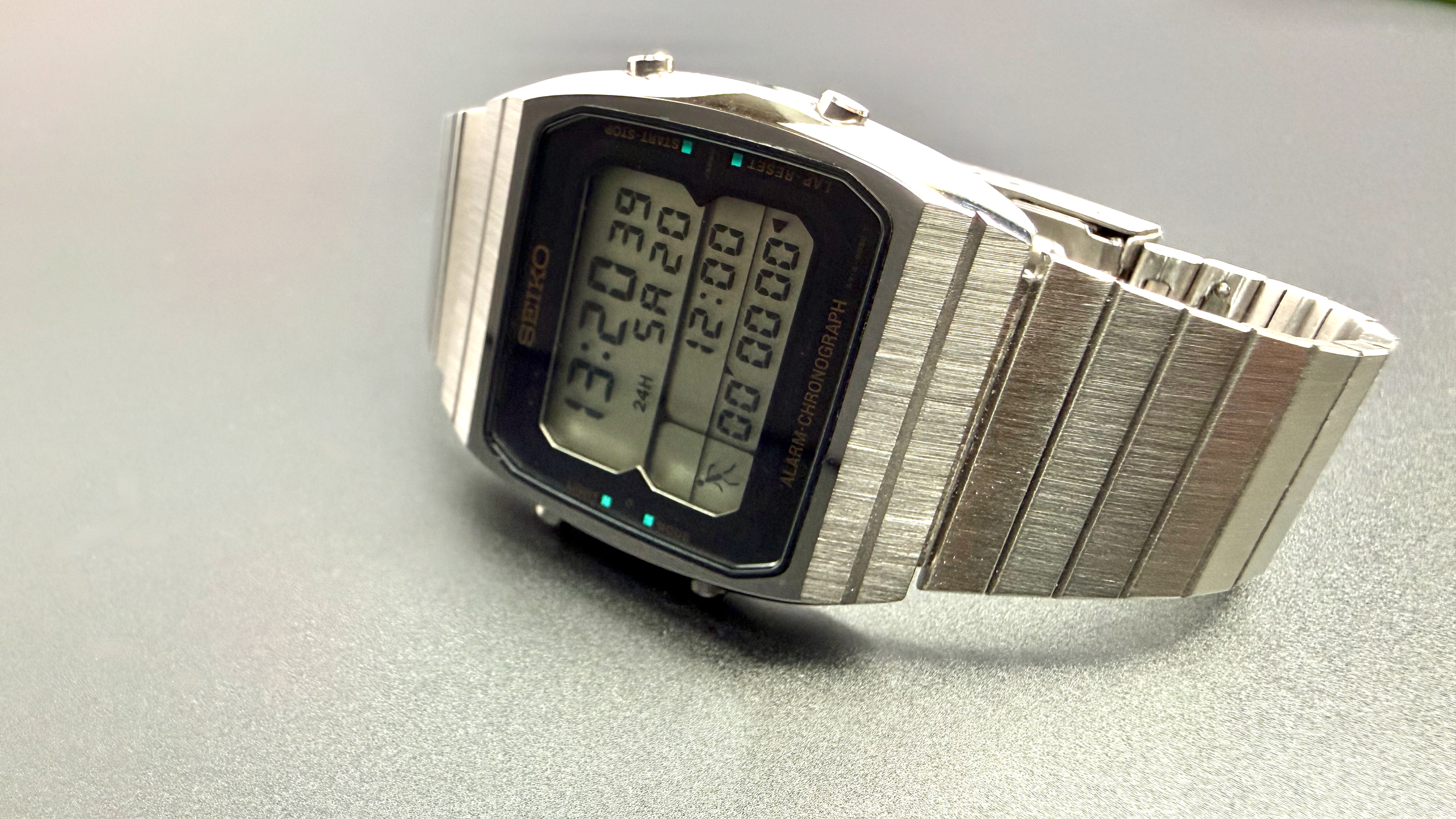
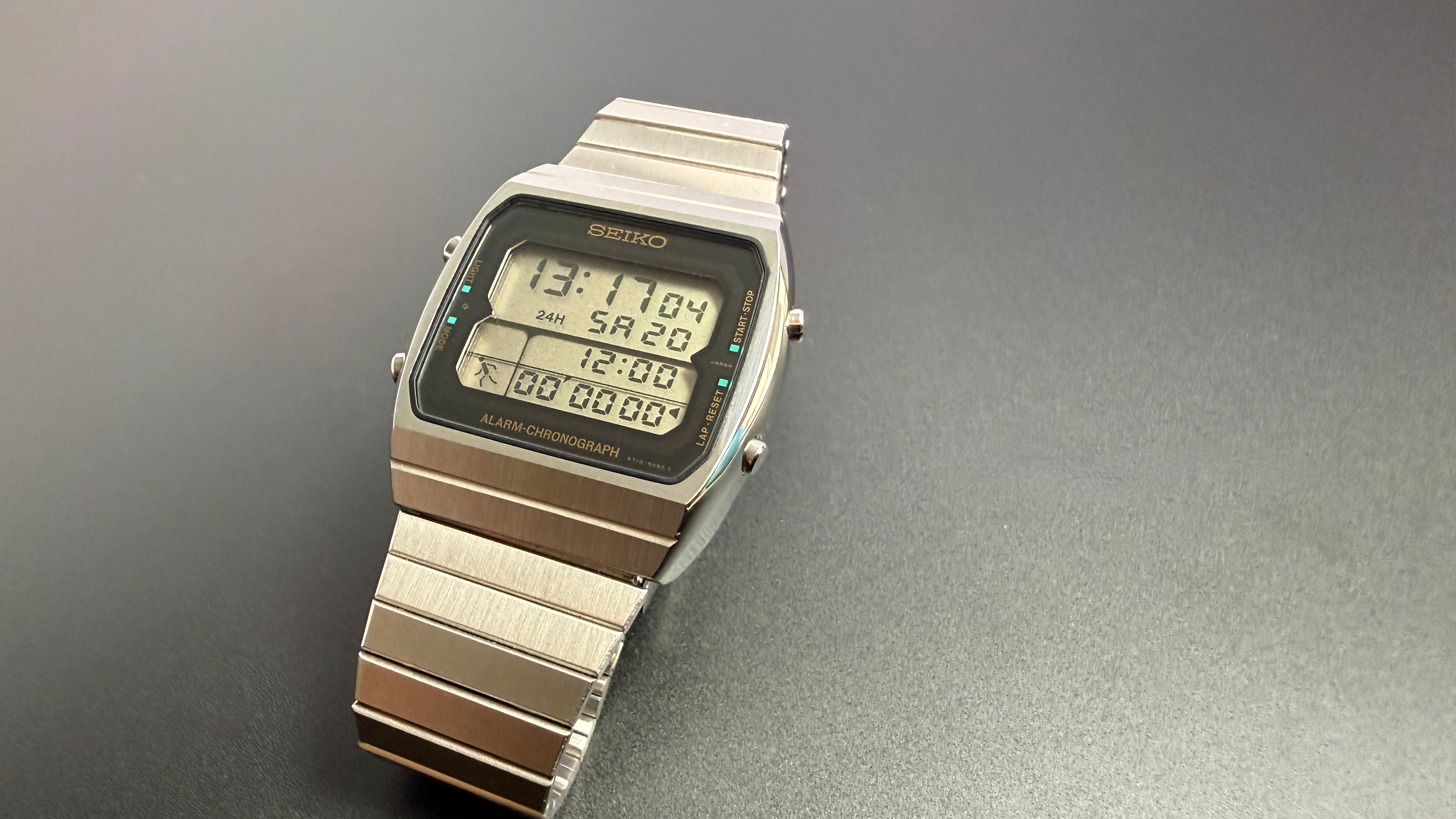
A strongly faceted, almost TV-screen case silhouette with a broad bezel framing the LCD.
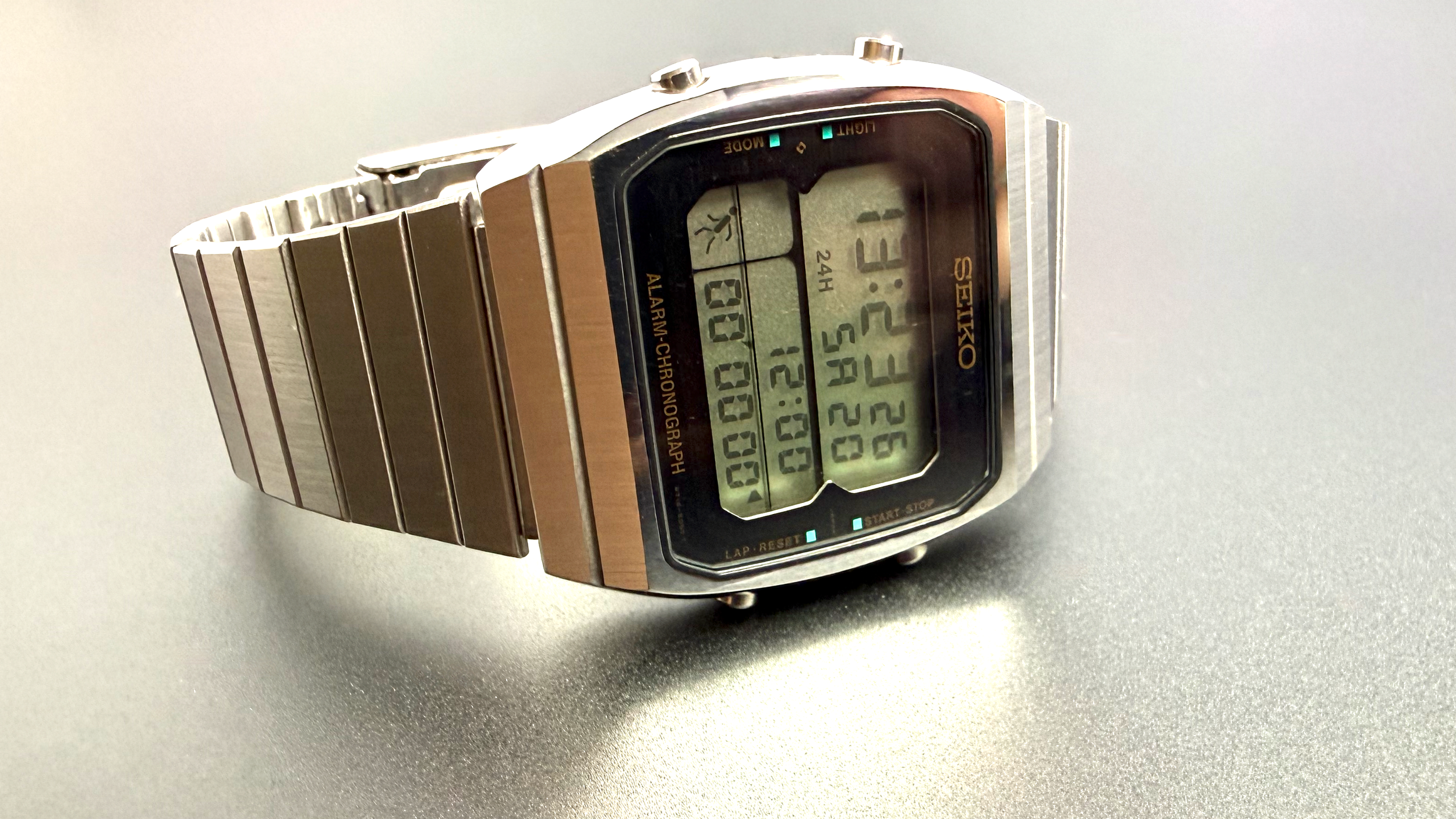
An integrated, tapered bracelet that reinforces that “single object” look.
Multiple pushers for function control—fitting for an alarm-chronograph that’s meant to be “used”, not just displayed.
And then there’s the display layout itself: big time readout, clear day/date line, and a lower section reserved for function information—exactly what you want from a watch designed around fast glances and button-driven utility.
The A714 Module: Quartz Utility With Personality
The “A714” isn’t just a reference detail for the caseback—it’s the heart of the watch, and it’s what gives the Running Man its reputation.
Quartz performance (the hard numbers). From our Seiko quartz battery/movement specification table, the A714 is listed with:
That ±15 sec/month figure is a great example of why quartz took over daily-wear duty: set it and forget it, with minimal drift over long periods. And a multi-year battery interval means it was built for real-world ownership rather than constant tinkering.
Why this module feels “premium” as a vintage digital
Not all quartz is created equal, and Seiko’s better quartz designs were about more than accuracy—they were about usability and smart features. In our technical notes on quartz watches, quality is framed not only by precision but by practical touches and engineering choices (designed to improve daily interaction and perceived refinement).
That context matters for the A714: this isn’t just a basic LCD time display; it’s a complication-driven digital tool with an expressive interface - you will keep watching that famous running man figure...
The “Running Man” Nickname: Animation as Identity
The little runner is more than a gimmick—it’s a branding moment, the kind Seiko used in the quartz boom years to make their digitals instantly recognizable.
On many vintage digitals, the display is purely informational. The Running Man is different: it adds a visual cue that turns the watch into something interactive and fun, a reminder that in that era “high tech” didn’t have to be sterile. It’s one of those details that makes collectors smile even decades later, because it’s so unapologetically of its time.
How It Wears: Retro-Futuristic, Surprisingly Modern
On wrist, watches like the Running Man often feel more current than you’d expect, because modern design has looped back to:
integrated bracelets,
geometric cases,
brushed/polished contrast,
bold, minimal “instrument panel” layouts.
This is the kind of vintage Seiko that doesn’t need a suit to look right—it pairs as easily with casual wear as it does with a more styled, retro-leaning outfit.
What Collectors Should Check Before Buying (but we already did)
Wat typically separates a “nice vintage digital” from a frustrating project:
1. LCD clarity and completeness
Make sure all segments display cleanly when cycling functions (missing segments can be a dealbreaker).
Pusher feel and response
Alarm-chronographs described on-dial as “ALARM-CHRONOGRAPH” are meant to be operated; mushy or unresponsive pushers may indicate dirt, corrosion, or wear.
Case geometry and finishing
This model’s appeal is in its crisp lines. Over-polishing can soften edges and reduce that sharp, architectural look.
Bracelet integrity
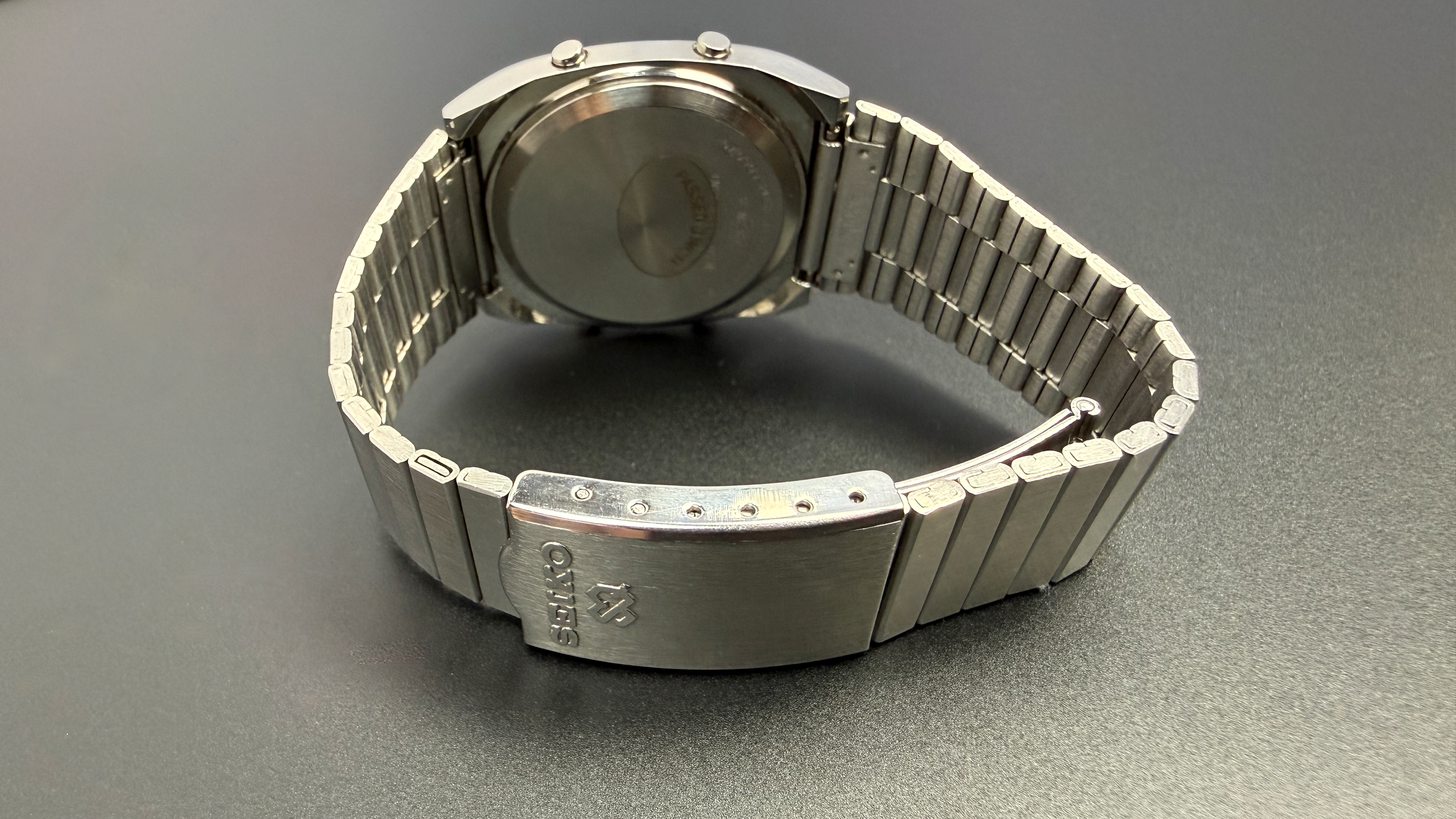
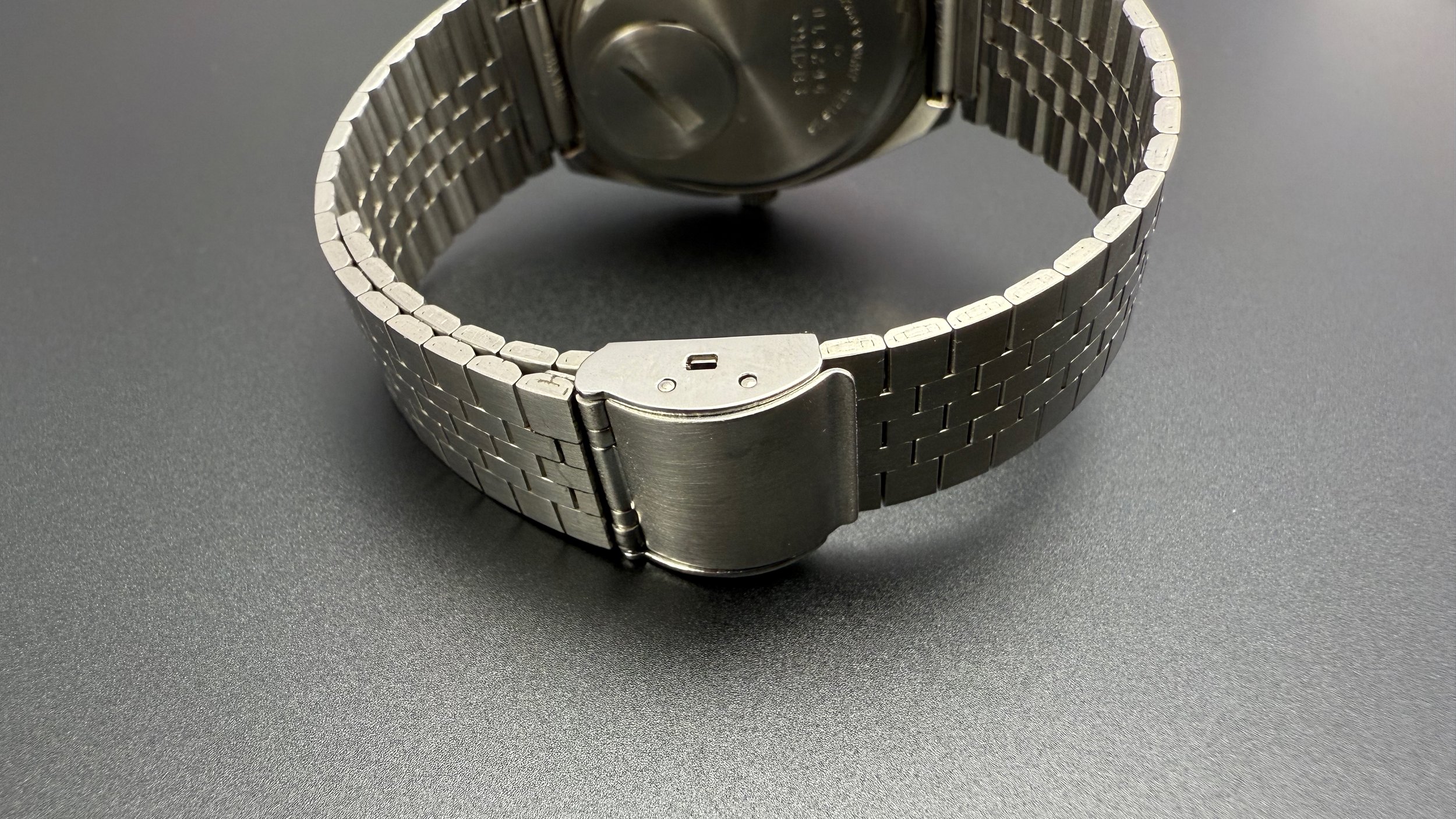
Integrated bracelets are a big part of the watch’s identity. Check stretch, link damage, and clasp condition.
Battery/service history
The A714 is listed with a long battery life (~5 years), but any vintage quartz benefits from careful servicing and inspection—especially if it’s been sitting for a long time.
Why the A714-5050 Still Matters
The Seiko Running Man A714-5050 is collectible for a simple reason: it captures a moment when quartz wasn’t “the cheap option,” but the exciting frontier. It blends strong industrial design with a genuinely charming display identity, and it delivers real functionality—alarm and chrono—without losing personality.
The Seiko “Running Man” A714-5050
A Wrist-Born Sprint Through the Quartz Age
There are plenty of vintage digital watches that feel like products of their time. Then there are the ones that “perform” their time—literally. The Seiko “Running Man” A714-5050 belongs to that second category: a sharply styled, early digital alarm-chronograph whose personality is baked into the display through a tiny animated runner. It’s a watch that manages to be both a practical tool and a small piece of wrist-mounted theatre.
What follows is a collector-focused look at what makes the A714-5050 special: its design language, the character of the A714 module, and what to pay attention to.
A Design That typifies “Seiko Digital”
Even without knowing the nickname, the A714-5050 announces itself as a Seiko digital from the era when brands were competing on shape, finishing, and interface as much as on raw timekeeping.
Several traits stand out:
A strongly faceted, almost TV-screen case silhouette with a broad bezel framing the LCD.
An integrated, tapered bracelet that reinforces that “single object” look.
Multiple pushers for function control—fitting for an alarm-chronograph that’s meant to be “used”, not just displayed.
And then there’s the display layout itself: big time readout, clear day/date line, and a lower section reserved for function information—exactly what you want from a watch designed around fast glances and button-driven utility.
The A714 Module: Quartz Utility With Personality
The “A714” isn’t just a reference detail for the caseback—it’s the heart of the watch, and it’s what gives the Running Man its reputation.
Quartz performance (the hard numbers). From our Seiko quartz battery/movement specification table, the A714 is listed with:
That ±15 sec/month figure is a great example of why quartz took over daily-wear duty: set it and forget it, with minimal drift over long periods. And a multi-year battery interval means it was built for real-world ownership rather than constant tinkering.
Why this module feels “premium” as a vintage digital
Not all quartz is created equal, and Seiko’s better quartz designs were about more than accuracy—they were about usability and smart features. In our technical notes on quartz watches, quality is framed not only by precision but by practical touches and engineering choices (designed to improve daily interaction and perceived refinement).
That context matters for the A714: this isn’t just a basic LCD time display; it’s a complication-driven digital tool with an expressive interface - you will keep watching that famous running man figure...
The “Running Man” Nickname: Animation as Identity
The little runner is more than a gimmick—it’s a branding moment, the kind Seiko used in the quartz boom years to make their digitals instantly recognizable.
On many vintage digitals, the display is purely informational. The Running Man is different: it adds a visual cue that turns the watch into something interactive and fun, a reminder that in that era “high tech” didn’t have to be sterile. It’s one of those details that makes collectors smile even decades later, because it’s so unapologetically of its time.
How It Wears: Retro-Futuristic, Surprisingly Modern
On wrist, watches like the Running Man often feel more current than you’d expect, because modern design has looped back to:
integrated bracelets,
geometric cases,
brushed/polished contrast,
bold, minimal “instrument panel” layouts.
This is the kind of vintage Seiko that doesn’t need a suit to look right—it pairs as easily with casual wear as it does with a more styled, retro-leaning outfit.
What Collectors Should Check Before Buying (but we already did)
Wat typically separates a “nice vintage digital” from a frustrating project:
1. LCD clarity and completeness
Make sure all segments display cleanly when cycling functions (missing segments can be a dealbreaker).
Pusher feel and response
Alarm-chronographs described on-dial as “ALARM-CHRONOGRAPH” are meant to be operated; mushy or unresponsive pushers may indicate dirt, corrosion, or wear.
Case geometry and finishing
This model’s appeal is in its crisp lines. Over-polishing can soften edges and reduce that sharp, architectural look.
Bracelet integrity
Integrated bracelets are a big part of the watch’s identity. Check stretch, link damage, and clasp condition.
Battery/service history
The A714 is listed with a long battery life (~5 years), but any vintage quartz benefits from careful servicing and inspection—especially if it’s been sitting for a long time.
Why the A714-5050 Still Matters
The Seiko Running Man A714-5050 is collectible for a simple reason: it captures a moment when quartz wasn’t “the cheap option,” but the exciting frontier. It blends strong industrial design with a genuinely charming display identity, and it delivers real functionality—alarm and chrono—without losing personality.